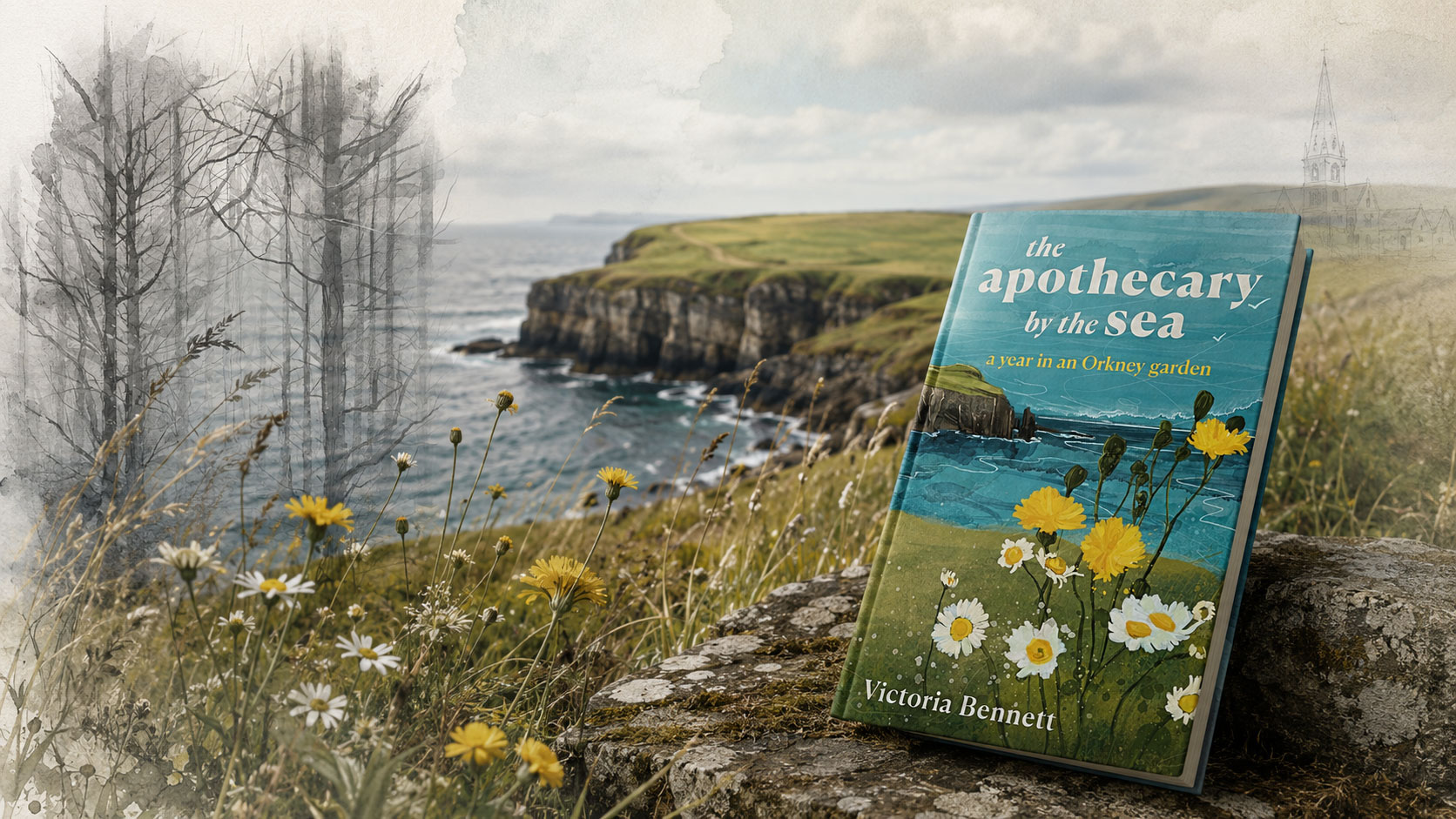
I am sitting, looking south towards the wild tumultuous waters of the Pentland Firth, on a very usual day in May, with a strong wind blowing from the north reminding me that our weather can be precocious. This is the place I call home, though like the author of this interesting and insightful book Victoria Bennett, I was not born here. For those who are not quite sure where Orkney is, here is a little background.
Orkney is an archipelago off the north-eastern coast of Scotland, with a rich history that includes some of the oldest Neolithic stone circles that are considerably older than Stonehenge and Avebury, indeed older than the pyramids. It consists of approximately 70 islands, of which 20 are inhabited. This is where you join the book on a journey that in the author’s own words she describes as “…part garden almanac, part memoir, and part herbal grimoire.”
This is the setting for The Apothecary by the Sea: A Year in an Orkney Garden, but this provides only a part of this deeply moving, lyrical meditation on what it means to rebuild a life when the patterns we previously relied upon no longer serve us. Ostensibly a memoir about planting a coastal herbal sanctuary on the windswept Scottish archipelago of Orkney, the book provides a much deeper, even spiritual reflection. The author explores and describes how the act of tending the earth can slowly mend the fractured spaces within the human soul.
Reading this book is to step into a liminal space, onto a threshold where the boundaries between geography, history, and internal landscape become blurred. It asks a fundamental question: how do we anchor ourselves when the ground beneath our feet has been washed away by grief, illness, and time?
The Geography of Healing and Grief
The narrative follows Bennett as she leaves behind the familiarity of Cumbria to relocate 500 miles north to St Margaret’s Hope, stepping from a world familiar to one only visited for holidays. Having moved through being the caring responsibility of raising a child, demanding elder caregiving, and the grief of losing her sister, Bennett also faces the realities of living with chronic illness.
The author reflects a profound vulnerability. It connects the harsh, beautiful Orcadian climate directly to her personal history— her enduring grief of her sister’s tragic drowning years prior. On these islands, where the North Sea meets the Atlantic, renowned for the strength of its tidal currents, which are among the fastest in the world, water is both a life-giver and a threat. Bennett does not shy away from this duality. Instead addressing these embraces the challenges of the salt spray and the unrelenting wind, finding a strange comfort in a landscape that makes no attempt to hide its own harsh challenges of the sea and the wind.
The book is cleverly structured around seasonal rhythms and the inherent movement of time between the short days of the winter and the long days of the summer, by which the Islands live:
- First Light: The fragile promise of awakening.
- Simmer Dim: The twilight of northern midsummer where night never truly arrives.
- Gathering In: The harvest of both plants and personal insights.
- Returning Winter: The necessary, dark retreat into quietude and survival.
This seasonal structure mirrors the cyclical, patient nature of life and recovery. It reminds us that healing is never a linear progression but perhaps a spiral or even in waves. They are a journey, sometimes smooth, and sometimes difficult, but the author takes to her with us, showing us aspects of nature and its importance to understand and reflect.
A Sanctuary Built from Scraps
Bennett’s journey resonates deeply, it is not romanticised, not an overly curated fantasy, it is not a story of an idyllic place, a Shangri-la. Her sanctuary is carved out of a small, scrubby, and exposed backyard. It is shaped entirely by tides, unforgiving storms, coastal seaweeds, and of the small garden that is when she arrives not really a garden at all.
This is not a world of manicured perfection, the sorts that are found in the best gardening magazines, Bennett offers an alternative philosophy of radical nurture and immense understanding of how nature works. She works with what is available:
- Discarded fishing nets to hold back the wind.
- Washed-up kelp to nourish the thin, depleted soil.
- Wild seeds gathered from the edges of clifftops.
She catalogues wild plants and crafts home-grown remedies, with her own warning that she is not a horticulturalist or an expert on medicine. The weeds and wildflowers that survive the salty gales she describes as act of a form of “poetic resistance”. Nettle, coltsfoot, and yarrow become more than mere botanical specimens; they are symbols of survival. They mirror the resilient micro-habitats she maps within her own chronic health condition and spirit, proving that life can flourish in the most hostile environments if given just a sliver of care, patience, love, and hope.
The Intertwining of Art and Plant Lore
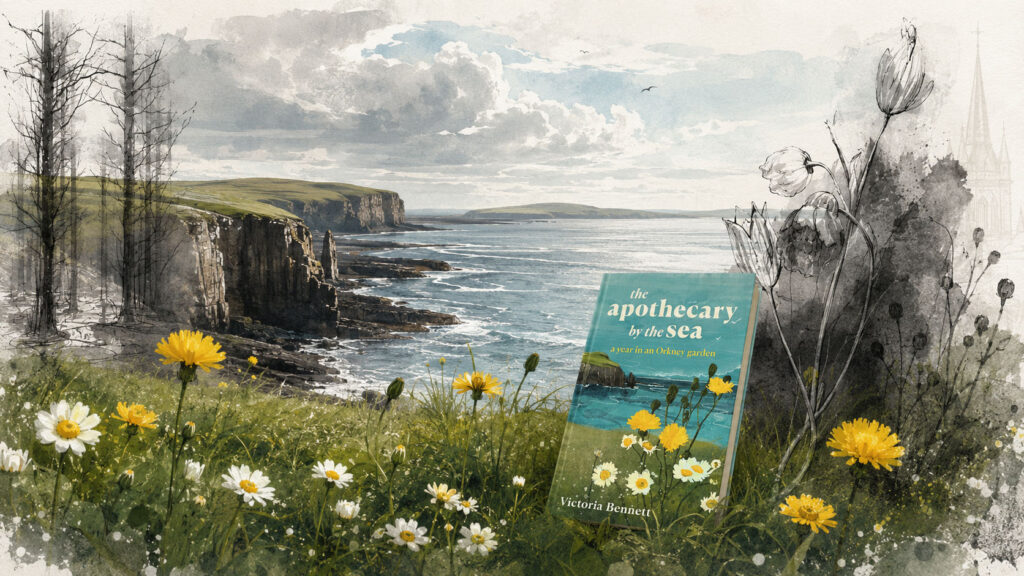
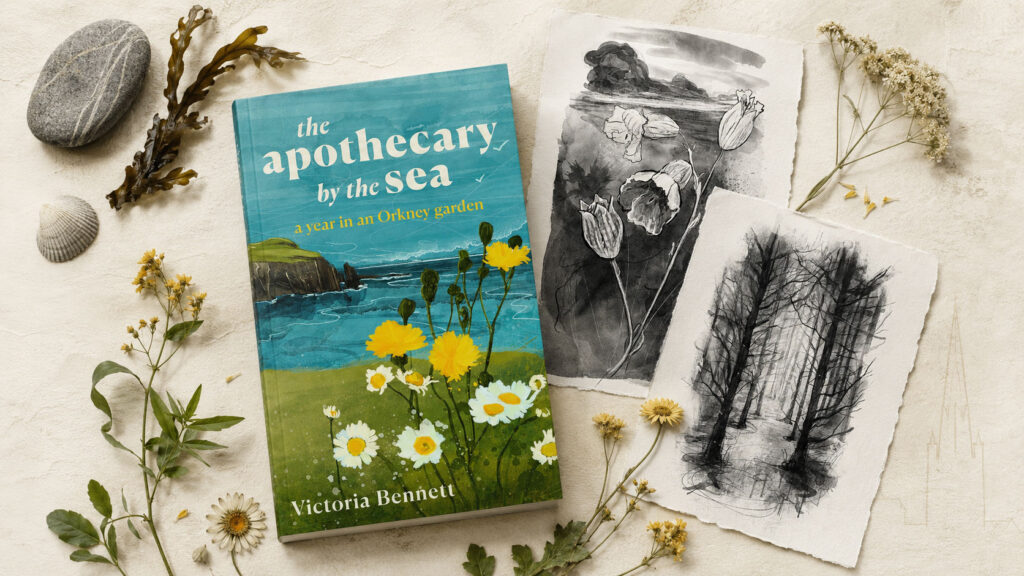
It has been said that the book reads like a modern-day herbal grimoire, blending practical botany with practical philosophical reflection. It is enhanced by the delicate black-and-white interior illustrations provided by her artist husband, Adam Clarke. These illustrations provide a graphical insight into the plants, the place, the very nature of the story being told and the journey, thoughtfully situated between the multiple micro-essays that each refer to a different plant that is explored and its healing virtues described. This gives the physical book the feel of a treasured family heirloom, a carefully written personal diary, or even a well-worn field journal.
The author’s writing style is sensory and grounded. You can feel the grit of the soil that she describes under her fingernails, the sting of the winter wind on her cheeks, and the soothing warmth of a freshly brewed cup of herbal tea. She writes not from a position of detached expertise, but from the messy, muddy reality of daily practice. Her relationship with the plants is reciprocal; she does not merely use them for healing; she listens to what they have to teach her about boundaries, endurance, and grace.
Final Reflections: The Art of Belonging
Ultimately, this book offers a comforting antidote to a turbulent, fast-paced world, of a world and people who rush by life, and who are detached from the harshness and the beauty of nature. It suggests that belonging is not always something we find instantly, but something we cultivate through time, careful observation, and radical patience. It challenges the modern narrative that we must always be producing, growing, and moving forward, showing instead the profound value of stillness, and rooting down.
Bennett invites us to accept our own limitations, embrace the shifting tides of age, and quiet the noise of modern life by listening intently to the land beneath our feet. This book is a quiet masterpiece of nature writing and memoir—a gentle reminder that even when we feel entirely uprooted, the earth is always ready to receive us, if only we are willing to listen and respect it.
This book provides not only a space of reflection by the author, but also one that we might use ourselves on our own journeys and challenges.
Harbinger is a resident of Orkney