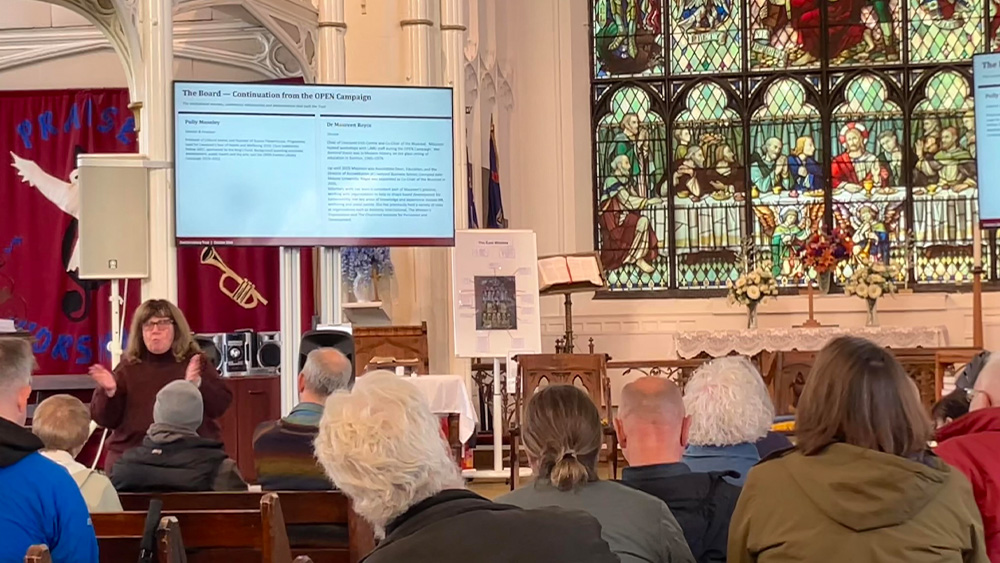
Dr Maureen Royce
Chair of the Liverpool Irish Centre, Co-Chair of the Bluecoat, PhD thesis “ Experiences of
If libraries were cute fluffy animals there would be an outcry about the extent to which they were being starved of resources, abandoned and in some cases left to wither and die. Prioritising libraries in an overcrowded field of need for public finances has been a hard and frustrating conversation. And yet, we talk about social value and the long-term impact of interventions without perhaps considering with enough care the consequences of losing the library spaces in our towns and cities. As housing shortages and work availability is informed by technological advances, people report feeling both isolated and disconnected from their communities.
The concept of a public library, a place open to all, with resources available to all, has been a significant part of the civic agenda since Victorian times. In a reflection of what we may feel is needed now, planners and architects imagined buildings with spaces for learning and personal development in a safe environment. Libraries then and now did not require the spending of what little disposable income people had in their pockets. Libraries were often recognised as ‘jewels in the crown’ of civic and urban culture. They were places where information could be provided and civic conversations could take place. Public libraries were also badged as practical “workshops” or “laboratories,” recognising their capacity to translate new skills and knowledge to their communities. A library card was a prized possession and played a part in the memories recalled when researching recall about public libraries one participant recalling:
‘I can remember getting my very first library book. I had to prove to the librarian that I could read’.
In ‘The lost tribes of Everton and Scotland Road’ one of the residents displaced from Everton in the post war housing restructuring refers specifically to her time in Everton library:
‘The library, too played its part, facing the school off Heyworth Street it was a revelation to me as a little girl. I was in awe of its fabulousness. I remember being especially impressed with the fact that I could freely ‘borrow’ books, which I did regularly. I loved the library. It is indeed a treasure.’
In my own life, growing up in a steel town of emigrant Irish parents, the library visits on a Saturday morning were a highlight. I knew my way around the shelves and the librarians knew and respected my mother. It was a safe place at a time when the stereotypical view of people like my family would not have included a love of literature and learning. This perspective was mirrored by the families in Everton and these phrases were captured on film by the Everton Library researchers in 2016.
- It was where we went when we had nowhere else to go
- We didn’t go to get books went to the library instead of going home
- Came out of school into the library excited to be out
- I used it and so did my mother. There were no other libraries we knew about.
- Sometimes we were told off for being too noisy
- There was a scary lady in there always on about the noise
- I loved reading, went with my friends from my school and other schools and felt safe
- I remember being there and feeling safe – some would now call it community. I came regularly and have the fondest memories
Returning then to the theme of articulating the cost of losing library spaces, it would be useful to consider the wider socio-economic impact as well as the impact on learning. Libraries provide safe spaces for learning and growth, especially in working class communities where opportunities may be limited. As an educator, I managed a number of part time programmes and was aware with every cohort, that there would be at least one female participant who, regardless of economic circumstances, could not safely study within the home. The rising concerns about social isolation and mental health do not appear to directly factor in the loss of library space and access providing a place to go where there are other people, where newspapers and magazines as well as books can be sourced and understood. When we worry about the nature of AI and the loss of criticality in understanding our complex world we do not factor in the reducing availability of spaces where alternative views can be sourced, understood and potentially discussed. In our civic agenda we worry about antisocial behaviour but do not address the question of providing alternative places to go. I am not suggesting that libraries are a magic potion solution to society’s ills, but their absence creates a vacuum.