Polly Moseley
Researcher, producer, campaigner, Secretary of Scouse Flowerhouse and Co-Founder of Everton Library Trust
My Dad’s love of architecture centred around churches, and, as most of my childhood holidays were spent in his homeland of Suffolk, I remember crossing the threshold of many Suffolk churches and enjoying the band of cool air across my face, and just knowing that from then on we would whisper and quiet was expected.
Another such type of place where the hush came over me were libraries, where I had more agency in making my own choices, so I looked forward more. My local libraries were Jesmond in Newcastle-upon-Tyne (in the era before gentrification), where I guzzled the long shelf of Nancy Drew mysteries, and Framlingham, often on wet summer days.
Just this year in 2026 I experienced a sense of awe and the immensity of two of the most beautiful libraries I’ve ever seen – that of the Rijksmuseum and the library in Ushaw Hall in County Durham. Though my visit was brief, Ushaw Hall’s library I learned was created in this Catholic seminary at a time when Catholic priests were not permitted to enter UK universities. The library there is split into two halves – one for sacred texts and one for non-sacred texts, the latter including a first edition of Charles Darwin’s ‘Origin of Species’ and some very beautifully illustrated texts on botany, entomology and natural history. The librarian carefully turned some pages, showing me elaborate and amazing pictures of fungi and wildflowers (we were there scoping a wildflower meadow, at the invitation of artist, Rebecca Chesney). I wanted to set up camp in the library there for weeks and months, there was so much to absorb all around me.
I recently went to the Memorial for Tony Hunt, my French tutor at St Peter’s College, Oxford, an extraordinary man, who loved Duke Ellington and played double bass, and who, I learned at his Memorial, also loved plants and his garden. His almost-monastic and tenacious life-long academic pursuit was to edit Norman mediaeval texts. Controversially, Dr Hunt didn’t believe in encouraging the writing of more critical texts, he believed in editing mediaeval texts to make them accessible to more people. Understanding this made sense of the lists of words he would give us to find out the meaning of – gleeful when they did not appear in the heavy and beautiful encyclopaedia. Sleuthing, finding clues, never thinking once to put the words into a machine or computer! And when I think about the thousands of hours he spent in the beautiful Taylorian, where I would sometimes go to sit in the Voltaire Room, and the value in his work and legacy, it already almost feels like looking back at another time.
Yet the people of Everton and Anfield are currently joining together, up in arms about the closure of another library – one which was leased to an organisation to run on Breck Road, a run-down shopping street, which lacks healthy shops and lacks safe, warm spaces for local people to meet and sit quietly with a newspaper or their thoughts.
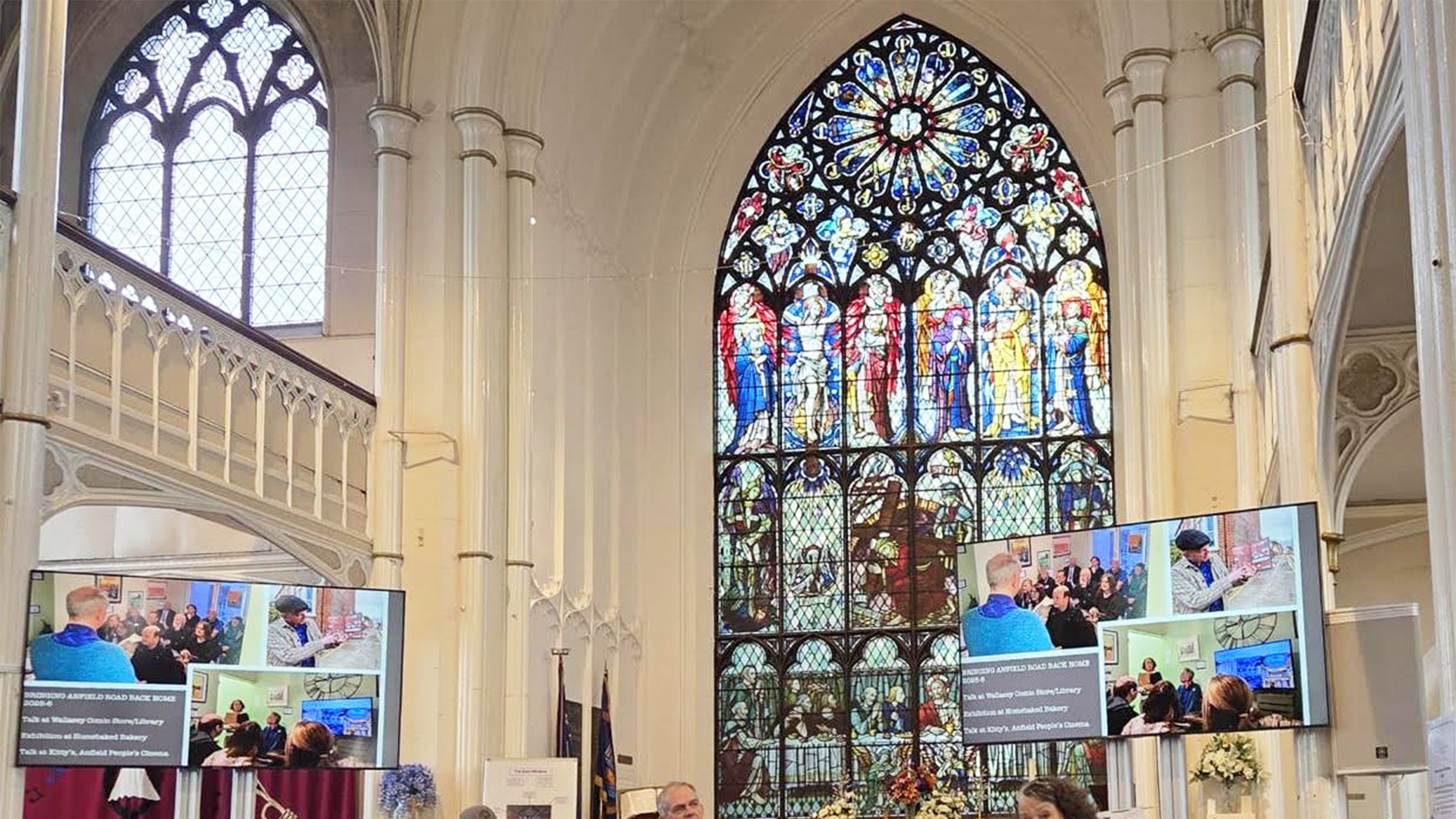
So the event we held on Friday 9th October in St George’s Church Everton – the Grade 1 listed first iron church ever built – which stands opposite the decrepit yet still beautiful, defiant Everton Library, colonised by pigeons, was all the more poignant for marking the 130th anniversary of the opening of Everton’s Technical Institute and Public Library. At that time there were five libraries over the two neighbourhoods, and now there are none, and there are fewer people, yet the people feel they count less than people in other parts of Liverpool, and statistics bear this out. These are the neighbourhoods which are known internationally for their football crowds, teams and stadia, yet which demand investment in basic facilities to stimulate learning and thinking beyond the bounds of what is currently offered within school walls and curricula. I met a young woman who had left her secondary school and loves history, one of so many young people not currently able to find what they need in school.
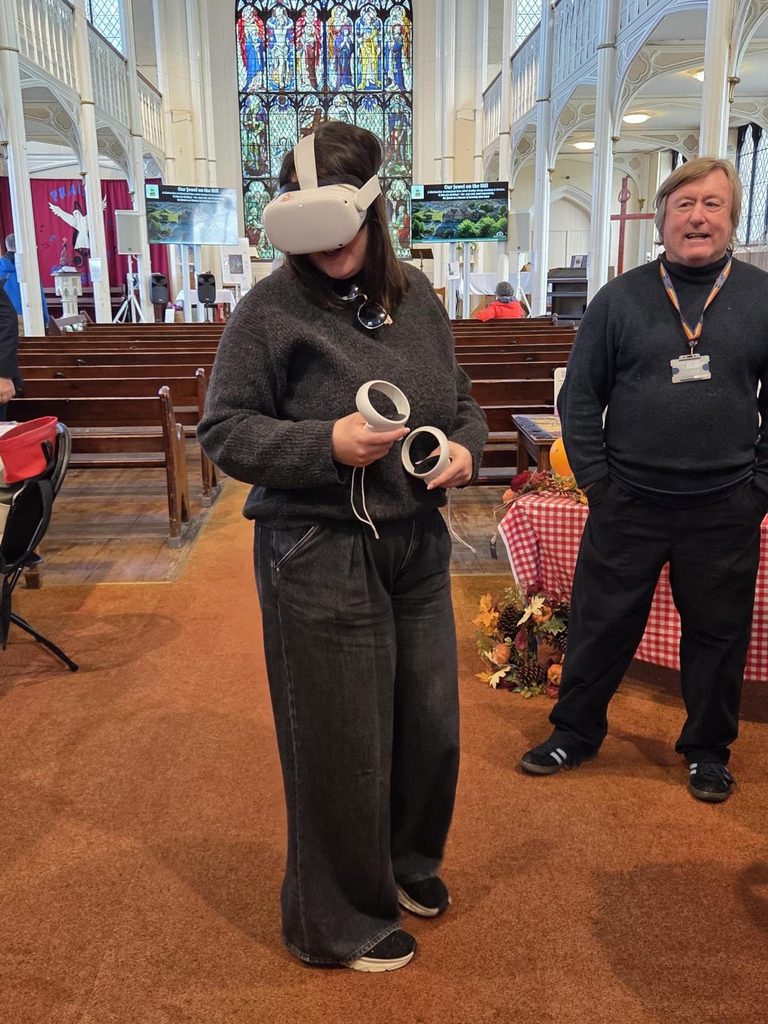
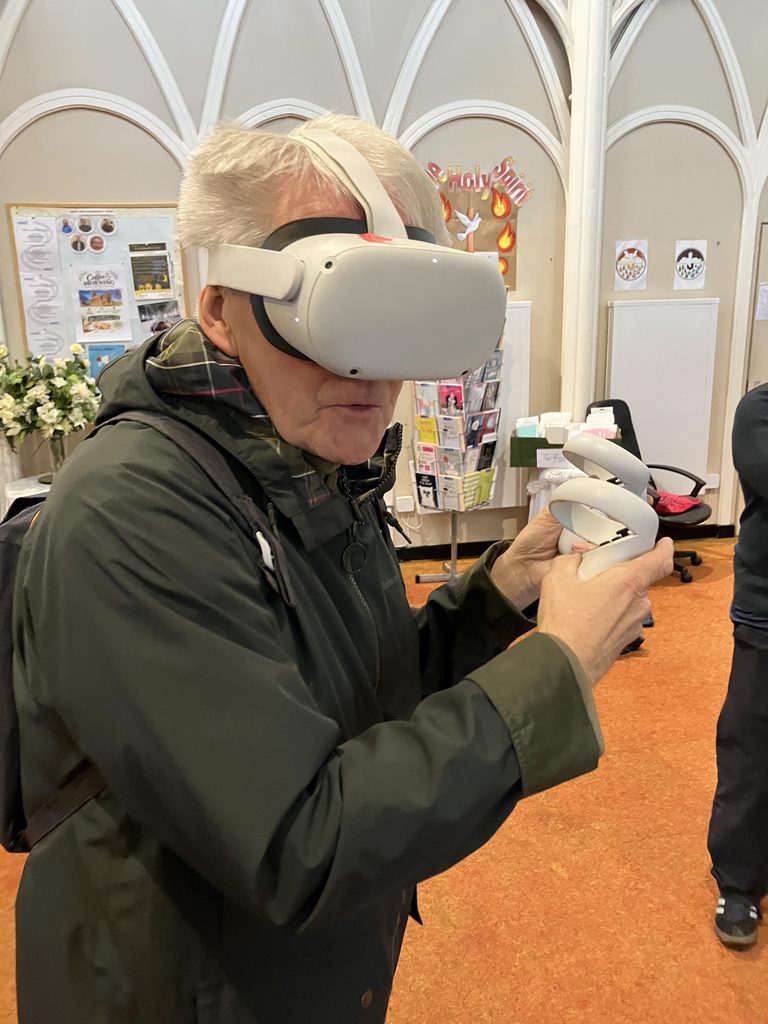
Chris Shepherd – Bafta-nominated film-maker – and Gary George O’Donnell, both local men brought up in Anfield and Everton, spoke about the awe inspired by the wood panelling and endless shelves of books in Everton Library, which lent out books 400,000 times in its first year of operation alone, as Gary highlighted. Their creative pursuits and sense of self stemmed from the many books they borrowed from that library and the Central Library, which is very much a meeting place for young people and visitors and older people and buzzes with activity every weekday morning and evening.
I know it only as an empty ship of a building, as I moved to Liverpool in 2009 and was drawn to this area – drawn to a sense of loss, to the intensity of feeling about this place, to the thousands of stories of those who left and those who have stayed. When I first led the OPEN Everton Library campaign, I thought of how a multilingual children’s bookstore may thrive in the café by the entrance. I was inspired by Claude Ponti’s gorgeous Dr Seuss-like worlds and the anarchic feel of the children’s bookstores I love in Paris and Nantes, also inspired by the bookstores I love in Wythenshawe, Bold Street (News from Nowhere), Shakespeare & Co in Paris, and those I once visited in San Francisco – places which invite browsing and taking time, and which have sometimes offered up the most magic of surprises and timely stories or pieces of knowledge, which have immediately slotted into my life, like missing pieces of a jigsaw.
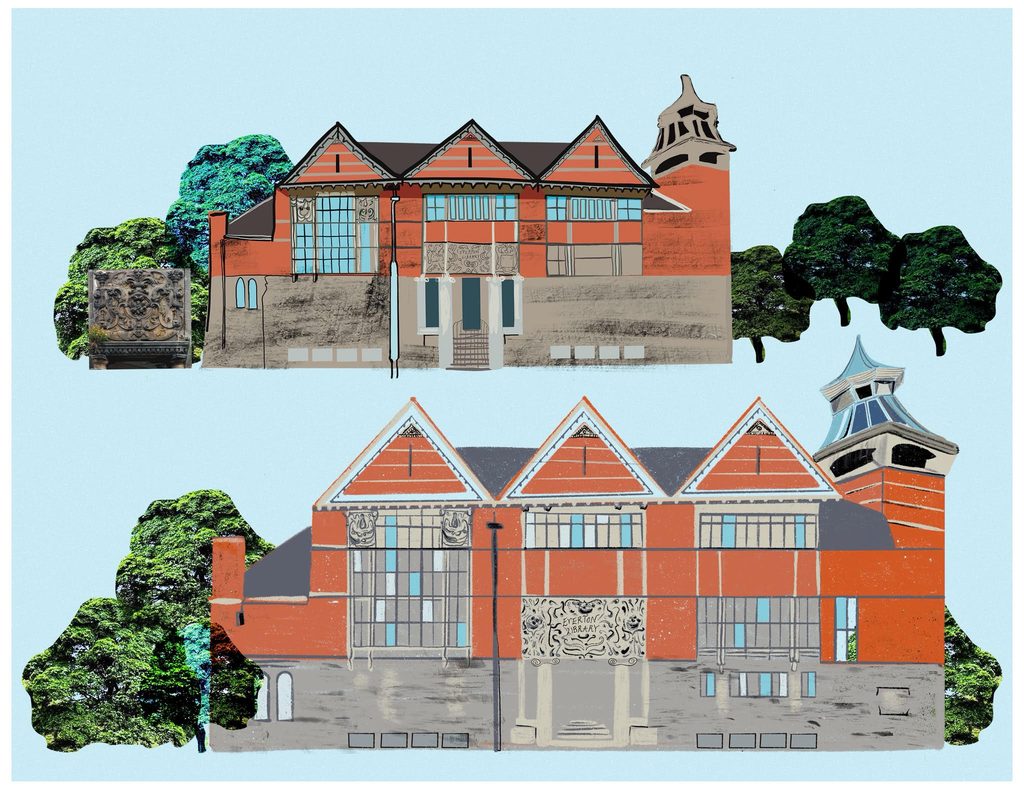
One of my first pieces of co-commissioned work in Everton was with Bruce Mau Design and Liverpool Biennial as part of Liverpool’s Year of Health and Wellbeing, and he coined the phrase ‘ForEverton Commons’. We need more common ground here and this includes common spaces. The promise of PFI to create community spaces has failed, and, as these contracts come to an end, we need to rethink how parks, libraries, health centres, launderettes, cafés and bookshops can be reclaimed as our commons. As my friend Jamie Reid said through his artwork – Beauty is a Birthright, Reclaim Your Heritage. The alliances formed around Everton Library are no longer hopeful but they are meaningful and it is by working together and playing to our community strengths that we just may be able to change the dereliction here for the better without razing more of it to the ground.