

Preamble:
It’s July 4th, 2026—America’s 250th birthday. Amid parades, patriotic speeches, and a fireworks display as dazzling as ever, the nation remains politically divided. Two siblings, Cornelius and Deborah, sit on the back porch of their childhood home in Maryland, iced tea in hand, reflecting on the country they love. Cornelius is anxious about where things are headed, especially under President Trump’s second term. Deborah, more hopeful, sees a nation that is correcting its course and becoming more inclusive in unexpected ways.
They are both committed Christians. What follows is their spirited and deeply personal exchange, as imagined by the Very Reverend Professor Ian Markham, Dean & President of Virginia Theological Seminary and President of The General Theological Seminary, New York.
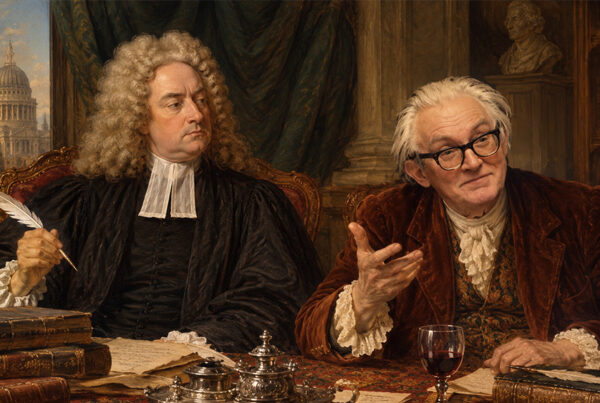
Cornelius: I don’t know, Deborah. It’s hard to feel celebratory today. I keep thinking about how far we’ve drifted from what the Founders hoped for. A country built on liberty and justice for all – now it feels like those ideals are being rewritten or weaponized.
Deborah: I get that it’s complicated right now, Cornelius. But I see something different. I see a country where more people are participating in the process, where long-dismissed voices are gaining traction. It’s messy – but maybe that’s what democracy looks like when it’s actually working.
Cornelius: Here’s where I’m coming from: we’re witnessing an administration that feels more “1984” than “1776.” Universities are being squeezed with taxes and forced to drop DEI like it’s radioactive. The Kennedy Center might as well hang a “Closed for Reprogramming” sign and is being renamed for Melania Trump. Law firms that dared represent Biden are being blackballed. And let’s not ignore the open hostility toward the LGBT+ community, especially trans youth. It’s not governing – it’s a revenge administration.
Deborah: Oh, come on. Every time conservatives sneeze, the left screams “dictatorship!” Let’s step back. Imagine if I told you in the ‘90s that the GOP would become the party defending Social Security, opposing foreign wars, and winning over working-class minorities. President Trump pulled 45% of the Latino vote, gained ground with Black Americans, and half of households making under $50,000 supported him. This isn’t totalitarianism – it’s a rebellion against the patronizing elite.
Cornelius: And every time the right wins an election, it thinks it has a mandate from heaven. Let’s be real – Trump won the popular vote by a whisker. The victory came down to three things: people miss the 2017 economy like it’s their ex, Biden ignored the border like it was a spam email, and folks were tired of language seminars telling them to say “birthing person” instead of “mother.” But no one voted to demolish universities, sue the media if there is a critical story about the president, exile scientists, or “accidentally” deport people to El Salvadoran prisons.
Deborah: You sound shocked there’s a price for decades of condescension. The left controlled the narrative, the universities, the culture. And as a Christian, I believe in Biblical marriage – one man, one woman. I love my gay friends, but I can’t rewrite Scripture to get to same-sex marriage. Even you would have a problem blessing a polyamorous quad and calling it discipleship. We need to be allowed to express traditional views. And don’t get me started on the Episcopal Church – try voicing a traditional view there and you’ll be handed a one-way ticket to ecclesial Siberia. The Academy? Worse. Name one Republican in the humanities department at a major University. That list is shorter than a Presbyterian altar call. And now people are fed up. Conservative voices weren’t just ignored – they were erased. You can’t cancel half the country and expect them to just take up knitting. So yes, the Trump administration is swinging a wrecking ball. But when dialogue is dead, the hammer’s all that’s left.
Cornelius: I’ll grant you this – the left can be smug, and we need more ideological diversity in academia. But this isn’t a Disney redemption arc. In the 1950s, conservative faculties excluded women and minorities; now liberal ones are paranoid about conservatives. It’s bad – but not unprecedented. And about this “poor white men as victims” narrative – come on. At Trump’s inauguration, where he promised to dismantle DEI, it looked like a board meeting from 1954. Somehow, we’re supposed to believe that white men are now an endangered species. Let’s not forget history: slavery, followed by segregation, followed by the “Just Say No to Black Progress” era of drug policy. Then came George Floyd, and we thought we might get real change. But boom – a DEI panic. It’s like white America can’t handle Black folks getting a fair shot. As soon as equality starts looking real, we get a backlash.
Deborah: Hold up. The idea that nearly half of Latino voters and more Black voters than ever just didn’t understand who they were voting for is… well, patronizing. Trump wasn’t whispering. He was yelling. They knew what he stood for. Racism is the original sin of America. And America does need to confront that sin. But DEI isn’t redemption – it’s guilt with no grace. You’re white? Congratulations, you’re part of the problem – forever. There’s no path to forgiveness. You’re either silently complicit or publicly shamed. That’s not justice. That’s ideological purgatory.
Cornelius: DEI has flaws – no argument there. But explain to me how racism always stays so stubborn. It’s the weed that Roundup can’t kill. That’s what DEI literature is trying to understand: how does racism survive every supposed “turning point”? And I’ve got to say, when Trump fires every person of color in senior leadership because they were “DEI hires,” and then fills those roles with loyalists who look like extras from The Apprentice – that’s not subtle.
Deborah: You won’t hear me defend all of Trump’s appointments. Some of those résumés were, let’s say, optimistic. And I do worry about his approach to the courts, especially on immigration. But let’s get real: for years, we were told that the immigration system was too complex to fix. Meanwhile, laws were being broken. People saw that and said, “Wait – are we a country or a suggestion?” El Salvador is safer now because their president cracked down. It’s often poor minorities in rough neighborhoods – not National Public Radio listeners in the suburbs – who suffer from gangs. Liberals say “show compassion,” but it’s easy to say that from behind a gated community. When families are being terrorized, “compassion” starts sounding like surrender.
Cornelius: Sure, but as Bishop Budde said, “Be merciful.” There should be a path to citizenship for someone who’s lived here peacefully for ten years. Mercy and law aren’t enemies. They’re supposed to be roommates.
Deborah: Before we get to mercy, let us try enforcing some of our immigration laws. And yes Trump will test legal limits. But every president tests the limits. Obama created DACA without Congress. Biden wiped out billions in student debt. Trump may push boundaries too – but I believe he’ll respect the final word of the Supreme Court. Eventually.
Cornelius: “Eventually” doesn’t fill me with confidence. But fine, I’ll take your hope over my cynicism. So where do we go from here?
Deborah: I want you to be a loud and public advocate for conservative Christians to have a voice – in the Church, in universities, and in public life. Not to be tolerated like the weird uncle at dinner, but actually respected.
Cornelius: And I want you to confront the racial realities of this administration. The rhetoric. The policies. The supporters waving Confederate flags while quoting Scripture.
Deborah: And I want us both to point to the Eternal God and the values expressed in the Eternal Word made flesh. And for us to both pray for each other and our country and world.
Cornelius: On this I can completely agree. Though if Trump appoints Kanye to the Supreme Court, we’re having this talk again.





Love this
It brings empathy to the fore. Hers for the voters and citizens who have felt patronised. His for those Trump seeks to oppress. This matters… understanding and empathy is the key to unlock compromise and consensus
The conversation format works really nicely to achieve this and exemplify consensus
Congrats. And TY
Thank you Ian! This was stimulating and entertaining. As a Brit with only a loose understanding of the USA’s law and administration I had to ask Professor AI what Obama’s DACA was. But I have read the autobiography of the man I fear will be the next President of the USA, and I would have responded to Deborah’s with nuggets from the ‘Hillbilly Elegy’ which indicate that JD got into Yale on a DEI programme. (I now see that depends on whether Yale did include benefits to “veterans” within its DEI remit when JD got admitted; it seems pretty likely to me because a man who writes as badly as JD, and with such a rudimentary grasp of American economy and society, would not get into Yale without some kind of allowance.) It is true, however, that some white people DO get all sorts of DEI-type benefits in the USA, as they should, when they are disadvantaged. (And ‘Regime Change’ by Haberman and Swan has a chilling explanation of how Musk hacked into the government’s computers to decimate DEI and USAID, literally at the stroke of a keyboard.) My other observation on this fascinating exchange is that it relies so much more heavily on sociology than it does on theology. Both Cornelius and Deborah show great promise as sociologists. [This is the kind of patronising remark that lefty sociologists that sociologists like me delight in!]