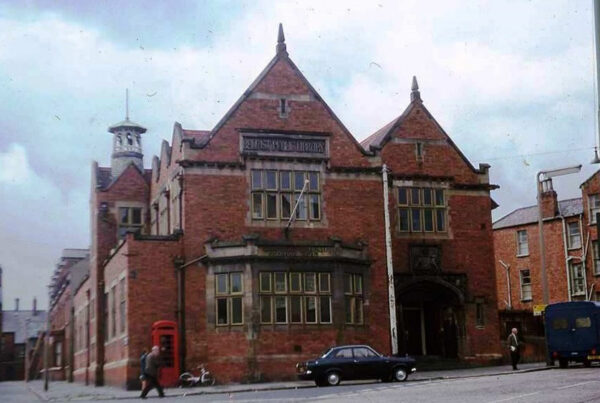
Pope Leo XIV’s Encyclical Magnifica Humanitas of May 2026 is both contemporary and yet deploys some Biblical language and references that our predecessors in Olney might have heard 250 years ago in sermons and hymns from Revd John Newton and in poetry by his friend and neighbour, William Cowper.
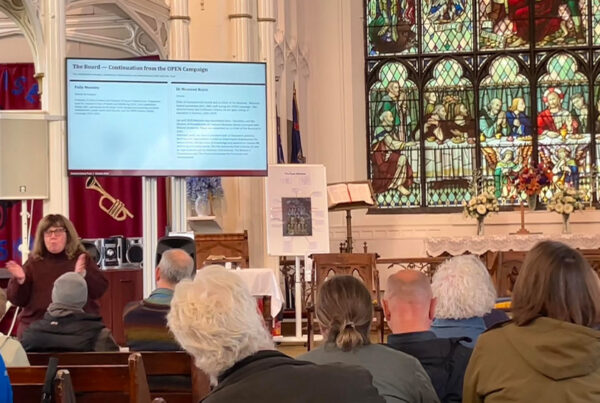
After the local celebrations of the 250th anniversary of Newton’s most famous hymn, known to us as Amazing Grace, our Catholic parish of Our Lady, Help of Christians, and St Lawrence in Olney started in 2023 a First Thursday Discussion Club, open to all with strong ecumenical participation from neighbours and surrounding villages. When Revd John Newton was the Anglican curate here 250 years ago, he held weekly clergy meetings on Thursdays for ministers from all Protestant denominations. We have turned this practice into a monthly gathering of laity as well as clergy, Catholics as well as Protestants, and all-comers whatever their faith or beliefs might be. We review books, documents, history, the arts, beliefs, controversies and now the latest developments in science and technology.
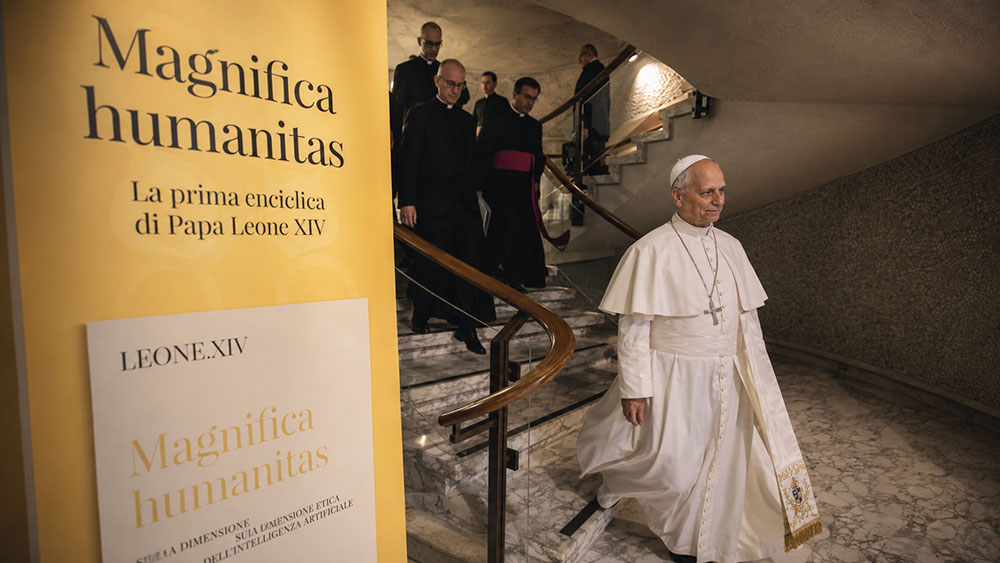
The April 2026 discussion was on Faith in Science, Technology, Engineering & Mathematics (STEM). The point was made in passing that Pope Leo XIV used to teach mathematics and physics. He had been talking earlier in the year in both Europe and Africa about Artificial Intelligence (AI). In May, Pope Leo issued his first encyclical, Magnifica Humanitas. This is freely accessible on the Vatican website.
Pope Leo draws on the Bible, theologians and Popes. He points out, for example, that Pope Leo XIII’s famous Encyclical was called Rerum Novarum, meaning ‘new things’ and the Church must constantly be encountering new developments in society. Using the Old Testament to address the new things of our age, he distinguishes what he calls the Babel syndrome and the Nehemiah way.
These references would have been well understood by Cowper and Newton. William Cowper refers to Babel in his poem, The Task. Newton’s Olney Hymn 42, ‘The joy of the Lord is your strength’, comes from the final phrase in Nehemiah 8:10 and has the familiar metre of 8 syllables in the first line of each verse, then 6, 8, 6, so you can sing the second verse, for instance, with the quintessential Newton word of ‘grace’, to the tune we associate with the hymn we know as Amazing Grace:
But where the LORD has planted grace; And made his glories known; There fruits of heavenly joy and peace Are found, and there alone.
This was probably composed in January 1773 as in Book 1 of the Olney Hymns, published in 1779, it immediately follows Amazing Grace which was listed as Hymn 4, with the title, ‘Faith’s review and expectation’. Referring back to the 1770s can help us to understand what the Pope means in 2026 by choosing ‘the way of Nehemiah’ in this era of AI.
In the words of Leo XIV,
We must, then, avoid the ‘Babel syndrome’, namely the idolatry of profit that sacrifices the weak, a uniformity that neutralizes differences, and the pretence that a single language — even a digital one — can translate everything, including the mystery of the person, into data and performance… Instead, let us choose the ‘way of Nehemiah’, which highlights the importance of working together to make the City of God a safe place for returning exiles.
building a world in which everyone can flourish requires shared responsibility and courage … scientists and researchers, entrepreneurs and workers, educators and legislators, civil society, popular movements and faith communities. This is the logic of subsidiarity, which values the cooperation between generations, peoples, disciplines and cultures as the best way for fostering stability, prosperity and peace. We should not be intimidated by tensions or differences because they can become creative forces when guided by shared responsibility.
Zeta O’Micron is a parishioner in Olney. ‘Omicron’ was one of the pseudonyms used by John Newton when commenting on the issues of his day.atholic Social Teaching. He and his wife live near Olney.