On history, imagination and the enduring human need to tell stories
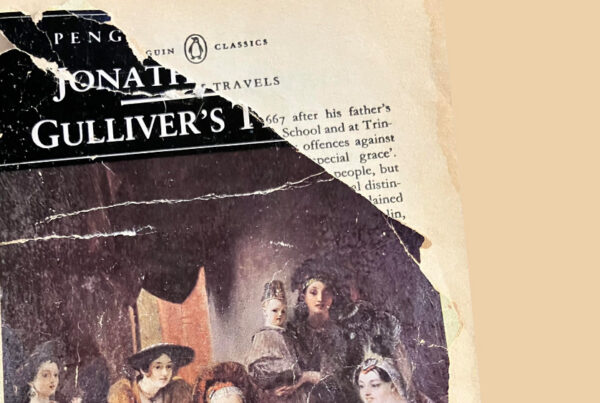
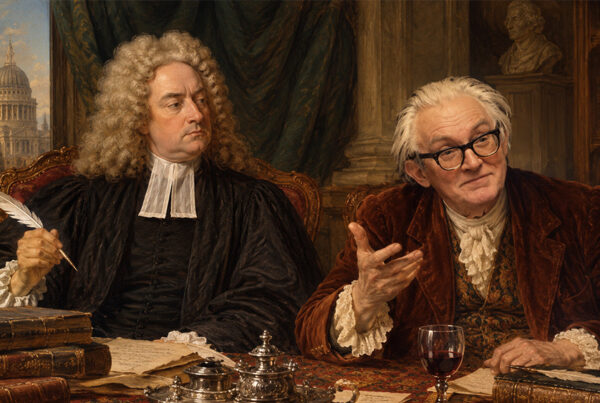
Dean Jonathan Swift of St Patrick’s Cathedral, Dublin, was not the only acclaimed academic who, from his lofty perch, dreamt up fantastical stories of imaginary lands and extraordinary worlds.
Writing from the dreaming spires of Oxford, C. S. Lewis, a fellow of Magdalen College, looked out across the magnificent vistas of Oxford’s colleges, doorways, windows and libraries, and conjured up the magical world of Narnia.
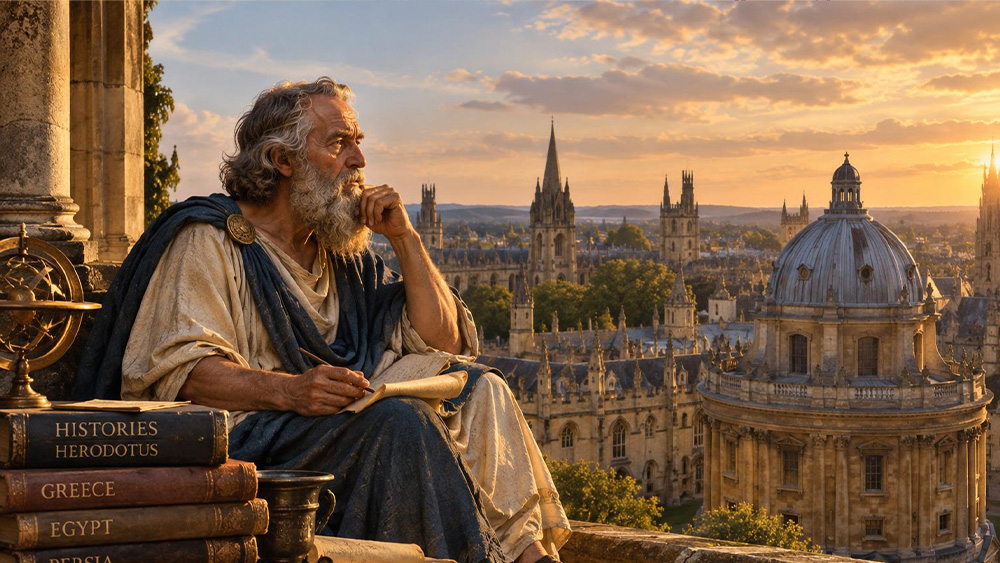
As I used to look out from the Radcliffe Camera towards the library of All Souls College, with its gigantic bookshelves and magnificent black-and-white marble floor, it was not too difficult for a dreamy student to imagine taking the blue pill and shrinking to the size of a dormouse, such was the scale and grandeur of the magnificent Codrington Library.
And just around the corner from Exeter College, or perhaps in meetings at the Rabbit Room of the Eagle and Child, Lewis’s academic companion and drinking pal, J. R. R. Tolkien, set against the backdrop of the great wars of the twentieth century, imagined an entire world and filled it with his own languages, elves, wizards and dragons.
Three academics, three fantastical minds, each dreaming up stories and histories grounded in human experience and historical precedent, transporting their readers into the labyrinths of their imaginations.
Stories and storytelling, real or imagined, form an inherited part of the human condition.
Homo sapiens remain the only species among the millions that have inhabited this planet, many of which we have ourselves destroyed, to have developed the extraordinary capacity to communicate complex stories, news and fables across generations.
Long before the first prehistoric artist applied primitive pigment to the walls of a cave, or the Egyptians created their magnificent hieroglyphs and monuments to mankind, humans were telling one another stories, creating heroes and villains, and even inventing gods through which to explain and make sense of their own existence.
In my Oxford entrance examination some forty years ago, the General Paper, through a happy coincidence, presented a question to which I had already devoted considerable thought:
Who was the first historian?
For students of history, this is one of the first great historiographical questions we are asked to ponder.
In the red corner stood Herodotus of Halicarnassus, the gregarious traveller, observer and collector of stories. A man whose life was spent journeying through much of the known Greek and Mediterranean world, stopping off at its islands and cities, heading into marketplaces and tavernas to listen, collect and expand upon the extraordinary stories and myths surrounding the great Persian conflicts, which saw the Greek city-states confront the overwhelming might of the Persian Empire.
It was the stuff of heroes. But his narrative was also formed from minutiae, habits, observations and anecdotes: the little details picked up over a fistful of olives beneath a tree on the outskirts of a village, or a cup filled to the brim with Greek wine in a local taverna, listening to shepherds, merchants, farmers and the descendants of those who had fought at Marathon, Thermopylae and Salamis against the armies of Darius and Xerxes.
Herodotus combined these accounts into his great work, The Histories.
He famously opened his account by explaining that his purpose was to preserve the memory of human achievements and to investigate the causes of the conflict between Greeks and non-Greeks.
The Greek word historiē, from which our modern word ‘history’ derives, originally meant inquiry or investigation. In Herodotus’s hands, however, inquiry embraced the collection of stories, traditions, eyewitness accounts and inherited memories.
Much of his material had not been written down. It had been remembered, recited and passed from one generation to another through the great oral traditions of the ancient world.
Here we must give proper credit to perhaps the greatest of all Greek storytellers, Homer himself.
Homer’s great epics emerged from an oral tradition in which stories were performed and transmitted through song, employing rhythm, repetition and recurring phrases that allowed the storyteller to move effortlessly from one episode to another.
From this tradition emerged the great legends of the Iliad, the fall of Troy, and the decade-long journey, both metaphorical and geographical, of King Odysseus in The Odyssey.
In the blue corner stood Thucydides.
Sage-like, considered, precise and analytical, Thucydides is often regarded as one of the founders of critical historical scholarship, owing to his determination to examine evidence and establish the causes of events.
Where Herodotus was a storyteller, perhaps the first great media man, gathering extraordinary accounts with which to regale his audiences, Thucydides approached his subject with something approaching forensic precision.
He frowned upon the embellishments and unverified traditions of earlier chroniclers, insisting upon careful investigation, scrutiny of testimony and analysis of political and military events.
His History of the Peloponnesian War sought not merely to entertain but to explain.
And so, in these two remarkable Greeks, we find the foundations of a tension that has shaped the study of history ever since: the relationship between the compelling story and the verifiable fact.
One sought to preserve the richness of human experience; the other to interrogate it.
Both understood that stories were essential to understanding the human condition.
The tradition of Herodotus has extended down through the centuries, finding particularly fertile ground in my own country, Ireland, home to poets, bards and storytellers.
Some ten years ago, I led a group that included the legendary All Blacks captain Sean Fitzpatrick, himself no stranger to tall tales or, indeed, to creating legends of his own, on a journey to County Clare in the far west of Ireland.
To introduce the group to Irish culture, I invited a traditional Irish storyteller to spend an evening with us in a local pub.
There, over drinks, he did precisely what his forebears had done for centuries before him.
He told stories.
Nothing was written down. There were no notes, no scripts, no PowerPoint presentations. The stories had passed from mouth to ear, from father to son, from one generation to the next, just as the accounts collected by Herodotus had survived in the ancient Greek world.
In Ireland, storytelling has always been a powerful cultural medium.
History and identity are passed down through poetry, stories and, perhaps most potently of all, songs.
One need only look at the continuing tensions surrounding the Garvaghy Road in Portadown, Northern Ireland, to appreciate how profoundly historical narratives remain embedded in contemporary identity.
On one side, men in sashes carrying banners and marching to traditional music seek to express their inherited story. On the other, a community responds through its own songs, symbols and collective memories.
A clash of histories, expressed through flags, images, music and ritual.
Perhaps therein lies the very conundrum at the heart of storytelling: that the same past can produce entirely different narratives, each passionately believed by those who inherit it.
The traditions of Herodotus and Homer have extended across the millennia into poetry, songs, storytelling and fiction.
Today, we are surrounded by stories in every aspect of popular culture: film, theatre, literature and television, imaginary worlds and real ones continually reinterpreted.
Alongside them survives the tradition of Thucydides: the disciplined, written pursuit of historical truth, the academic and forensic obligation to ensure that our understanding of the past rests upon evidence rather than merely the attractiveness of a narrative.
And in our modern world, the mediums through which stories are told have multiplied beyond anything the ancients could have imagined.
An Instagram influencer can communicate an entire narrative through a single image. A politician can reinterpret the past to justify a vision of the future. Propaganda can turn selective memories into apparently established truths.
Somewhere between the seductive power of the story and the rigorous demands of evidence lies our continuing struggle to understand what is true.
We have never had greater access to information, yet perhaps never faced a more complicated challenge in distinguishing history from mythology.
And so, back to the Rabbit Room at the Eagle and Child.
Imagine, for a moment, C. S. Lewis and J. R. R. Tolkien sitting opposite one another in the snug of that Oxford pub.
Two academics, surrounded by books, history and the intellectual inheritance of centuries, discussing stories that would become two of the most extraordinary imaginative universes in modern literature.
Narnia and Middle-earth.
Worlds populated by mythical creatures, heroes, villains, battles, kingdoms and moral struggles. Yet worlds that mirror our own, drawing upon history, religion, mythology, language and the eternal conflicts of the human condition.
Both men were, in their own fashion, heirs to Homer and Herodotus.
Their genius lay not simply in inventing fantastical worlds but in making those worlds feel as though they possessed histories of their own.
As an Irishman, I am particularly proud that Dean Jonathan Swift belonged to this great tradition.
Swift, a graduate of Trinity College Dublin and later Dean of St Patrick’s Cathedral, understood perhaps better than most the power of imaginary worlds to illuminate the absurdities of the real one.
In Gulliver’s Travels, he created strange lands, extraordinary peoples and fantastical societies. Yet beneath the apparent whimsy lay a devastating examination of politics, human vanity, ambition, prejudice and the follies of civilisation.
Swift was not merely telling stories.
He was using the freedom of imagination to interrogate the world around him.
And in this respect, he was as much a disciple of Thucydides as of Herodotus.
The Irish tradition produced another extraordinary figure in W. B. Yeats, who combined the Herodotean instinct for collecting folklore and inherited stories with a profound sense of Irish history, mythology and national identity.
Through his poetry, plays and involvement in the Irish Literary Revival, Yeats helped transform the stories of an ancient culture into a modern literary renaissance.
Of course, one would be remiss not to include perhaps the greatest storyteller of them all: William Shakespeare.
Shakespeare’s genius lay in his extraordinary ability to recreate entire worlds and historical events, combining all the traditions of his storytelling forebears.
History, narrative, truth, propaganda, entertainment and linguistic mastery were brought together in a body of work that has itself become part of history.
His kings and queens, lovers and villains, generals and fools inhabit our collective imagination as vividly as many of the historical figures upon whom they were based.
Indeed, for generations, Shakespeare’s interpretations of historical events have influenced popular understanding of the past as powerfully as the work of historians themselves.
And therein lies another fascinating intersection between history and storytelling.
The stories we tell about the past can become as influential as the past itself.
Finally, I return to the ivory towers of Oxford.
I think again of the Bodleian Library, one of the world’s greatest guardians of books, manuscripts, stories and historical memory.
I think of the magnificent buildings, the colleges and libraries, the ancient staircases and cloisters, each filled with the stories of yesterday while providing sanctuary and inspiration to the storytellers, scholars and history-makers of tomorrow.
Oxford is a place where the past is never entirely past.
It lives in the architecture, in the libraries, in the conversations of students, in the arguments of academics and in the imaginations of those who pass through its gates.
And perhaps that is the thread connecting Herodotus and Thucydides, Homer and Shakespeare, Yeats and Tolkien, Lewis and Swift.
They were all, in their different ways, attempting to make sense of the human condition.
Some sought truth through evidence. Others sought it through imagination. Some collected the stories of others, while others invented worlds of their own.
Yet all recognised that humanity understands itself through narrative.
And so it seems fitting to give the final word, or at least the final thought, to Dean Jonathan Swift.
For Swift understood that sometimes the most effective way to reveal the truth about the world is to invent another one entirely.
From the imaginary islands of Gulliver’s Travels to the kingdoms of Narnia, from the battlefields of ancient Greece to the songs of a County Clare pub, the human instinct remains unchanged.
We tell stories to remember.
We tell stories to explain.
We tell stories to entertain, to persuade, to challenge and sometimes to deceive.
Above all, we tell stories because, without them, we would struggle to understand who we are.
History is the story we inherit. Imagination is the story we create. And somewhere between the two lies the extraordinary adventure of being human.